Showing posts with label Rejuvinating. Show all posts
Lemon balm tea is considered to be one of Natures wonders. This aromatic tea is brewed by placing the leaves of the lemon balm herb into boiling water and steeping it for as long as the individual wants. The length of the brewing determines the strength of the tea.
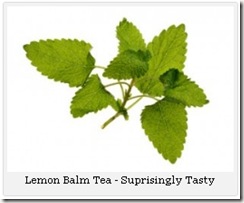
Lemon Balm Tea 01 Proponents of lemon balm tea attest to it’s abilities to fight insomnia and other sleep difficulties. They also say that it can combat nerve pain. Others tout it’s abilities to alleviate gas and other disorders of the digestive system. The tea is also said to help with memory and other brain functions.

There are also folks that attest to this teas propensity for anti-herpes and thyroid regulating abilities. A number of aficionados believe that lemon balm tea can help to elevate their mood.

The botanical name for lemon balm is Melissa Officinalis and it is also known as the bee plant, because Roman beekeepers would place sprigs from this herb inside their hives to attract swarms of bees. The name Melissa comes from the Greek word for bee.

Arab physicians promoted the therapeutic uses of the lemon balm herb and praised it’s ability to reduce swelling and close wounds. The leaves are also used to treat bites and stings and the ointment is also said to repel insects. It also produces perspiration and therefore is used in the treatment of feverish patients especially those with influenza.

Throughout history lemon balm tea was reputed as being able to “renew”, therefore it was used as an “elixir of youth”. For this reason it is believed to be an herb that adds to longevity.

 This herb should be cut when it begins to bloom. Adding it to foods along with other spices adds wonderful flavor to culinary dishes. It will combine well with rosemary and thyme, bay leaves, allspice, mint and pepper. It can also be added to fruit and green salads, fruit drinks, herb butters, and sorbets.

Adding lemon balm to egg dishes, soups, casseroles, and custards gives an added subtle flavor that will impress the most finicky palate. It is also an herb that can be added to meat dishes such as lamb, poultry and pork.

The many ways that this herb can be used adds to it’s popularity, but the most beneficial use is as lemon balm tea, if only for it’s promise to increase the length of time we can enjoy it’s benefits.
Article Source: HerbalTeaBoutique
Chamomile tea has been used as a healing drink for centuries so it’s no wonder that it is estimated that over 1 million cups are ingested every day. The medicinal properties of this tea are wide and many, but perhaps the best known is it’s ability to help you relax. Many people like to drink it before bedtime as a sleep inducer and one herbal medicine guide claims that drinking chamomile tea before bed will stop nightmares.
Chamomile TeaChamomile tea can be purchased from almost any health food or grocery store. You can make your own by pouring one cup of boiling water over four or five fresh flower heads. Let the tea steep for 5 minutes and strain.

Some natural medicine books recommend using chamomile tea for children and the does should be half of the adult dose. Make sure you let your childs doctor know before you give him chamomile tea.

Although this tea is fairly safe, some can have severe allergic reactions. If you suffer allergies such as ragweed or hayfever, it might be best to avoid drinking chamomile tea. People with Asthma should drink chamomile tea with caution. Although it is said chamomile tea can help relieve the pain of labor, it is not advisable to drink a lot of it during pregnancy as it may cause uterine contractions.

 
Healing Uses Of Chamomile Tea

- Add several cups chamomile tea, to a cool bath and have a relaxing soak.

- Use chamomile tea to relieve anxiety or put a handful of chamomile flowers in a bowl of hot water and inhale the scent.

- Use a poultice of cool chamomile tea for burns.

- To relieve insomnia, drink a cup of chamomile tea at bedtime

- Drink a cup of hot chamomile tea to soothe an upset stomach.

- Add chamomile oil or tea to a hot bath to help soothe dry skin.

- Use chamomile tea and powdered milk as an exfoliating paste for sensitive skin.

- Cooled chamomile tea can be made into a compress to soothe irritated and strained eyes and is reputed to help treat conjunctivitis.

- Chamomile is an anti-fungal, therefore a tea can help treat fungal infections by dipping into a cotton ball and applying to the area.

- Chamomile tea is also said to help relieve menstrual cramps in women due to it’s ability of relaxing the uterus.

Chamomile tea has been a common beverage for eons and its safety can be regarded as well proven. The calming effects of this tea are rather mild, so they may not be experienced by everyone.

Article written by Lee Dobbins of Herbs and Home Remedies - where you can learn more about herbs and natural healing. To view the original post, click here.
There are only a few 'proven' white tea health benefits to date, but they look very promising from here.

A lot of good things have been said about white tea. So when I look into it, I expect to find lots of gold.

It hasn't disappointed. Although I find only 4 published studies on white tea health benefits, 3 of them claim white tea to be a more effective cancer-fighter and germ-killer than green tea.

It is not easy to out-do green tea. The results are preliminary, but it is a fantastic start.

Am I surprised? Not really.

High grade white, like high grade green, is made from young tea shoots, which has been shown again, again and again - to have the highest concentration of nutrients.

White tea is the least “fired” of all teas, which may explain why it contains more antioxidants than green tea.

White Tea Health Benefits #1:
Protect against cancer mutation

white tea health benefitsA 2001 study conducted by Oregon State University compared white tea and green tea for their cancer fighting potential.

Each cancer starts with one cell.

It happens when the genes become damaged or lost in a process called mutation, causing cells to multiply uncontrollably.

People only take notice when they feel a lump and see a doctor
Green tea has been known to protect against cell mutation. Does white tea offer the same antimutagen benefit?

Scientists from Paul Linus Institute conducted a test called Salmonella assay to find out.

Bacteria culture was exposed to a carcinogen called IQ, which is also found in fried or broiled meats. Either white tea or green tea was added.

It was found that white tea was always more protective than green tea, sometimes by a factor of 5.

White Tea Health Benefits #2:
Treat colon cancer without side effects


white tea health benefitsA 2003 study conducted by Oregon State University found that white tea is highly potent in treating colon cancer in mice.

The scientists compared white tea, green tea and an anti-cancer drug called sundalic. They were given to mice pre-disposed to developing cancer to drink.

After 12 weeks, untreated mice developed 30 tumours.

Mice that drank green tea and white tea developed 17 and 13 tumours respectively.

The best result went to mice that had both white tea and sundalic; they developed the lowest number of tumours - 6.

White Tea and Colon Cancer - Medicine Without Side Effects

White Tea Health Benefits #3:
Kill germs and prevent infections


white tea health benefitsA 2004 study conducted by Pace University concluded that white tea fights bacteria, viruses and fungi.

White tea retards the growth of bacteria such as Streptococcus, which has been known to cause infections such as sore throat (pharyngitis), scarlet fever, and pneumonia, as well as dental caries.

White tea also fights fungi such as Penicillium chrysogenum and Saccharomyces cerevisiae, and so may be helpful to people suffering from yeast infections.

The scientists added white tea extract to several toothpastes, then placed the paste on germs in a lab.

Previous studies have found that green tea boosts the immune system. This study suggested that white tea is even more powerful than green tea.

"People should drink white tea," said Milton Schiffenbauer, who conducted this study.

"Our research shows white tea extract can actually destroy in vitro the organisms that causedisease. Study after study proves that it has many healing properties."

White Tea Health Benefits #4:
Keep skin young


white tea health benefitsA 2003 study suggested that white tea may slow down aging skin conditions such as wrinkles and pigmentations. This study was conducted jointly by University Hospitals of Cleveland and Case Western Reserve University.

The scientists applied white tea cream on the subject's buttock, then exposed it to artificial light.

They found that tea-treated skin continued to function properly afterwards with limited DNA damage, but untreated skin was damaged by light.

The scientists believed white tea works because of its powerful antioxidant. The study suggests that white tea cream may have anti-aging effects on skin.

"Similar to the way oxidation causes a car to rust, oxidative stress of the skin causes a breakdown in cellular strength and function," said Dr Elma Baron, director of Skin Study Center.

"The white tea extract protects against this stress."

"We know that younger skin tends to be able to resist the oxidative stress associated with exposure to the destructive rays of sunlight," said Kevin Cooper, chairman of the Department of Dermatology.

"The white tea extract also appears to build the skin's resistance against stresses that cause the skin to age."

Article Source: Amazing Green Tea.com


Ordinary tea, as most people know it, comes from the leaves of the camellia sinensis plant. There are three main types of tea: green tea, oolong tea, and black tea, categorized according to their oxidation levels (called the fermentation process). Green tea is steamed, baked, or pan heated to prevent oxidation and thus the leaves remain green. Unlike green tea, oolong tea is partially fermented, and black tea is fully fermented.
So why is green tea getting all the attention in the science world? It's mainly because of the antioxidant epigallocatechin-3 gallate ( EGCG ), the main component considered good for one's health which is preserved in green tea but lost in oolong and black varieties when fermented. Antioxidants are thought to prevent free radicals.


Free Radicals - What exactly is a free radical?
 A scientific explanation: In essence, a free radical is any molecular species capable of independent existence, that contains one or more unpaired electrons not contributing to intermolecular bonding, and is, in that sense, "free". They are produced by oxidation/reduction reactions, in which there is a transfer of only one electron at a time, or when a covalent bond is broken and one electron from each pair remains with each atom. Thus, a free radical has an unpaired electron.

Many free radicals are highly reactive, owing to the tendency of electrons to pair; that is, to pair by the receipt of an electron from an appropriate donor or to donate an electron to an appropriate acceptor. Whenever a free radical reacts with a non-radical, a chain reaction is initiated until two free radicals react and then terminate the propagation with a 2-electron bond, with each radical contributing its single unpaired electron. The free radicals of special interest in aging are the oxygen free radicals (OH., H., O2.-). These free radicals often take an electron away from a "target" molecule to pair with their single free electron; this is what is commonly termed oxidation. The term reactive oxygen species is used to refer to these oxidants and the oxygen free radicals.
In the human body, oxidized free radicals are believed to cause tissue damage at the cellular level, causing damage to our DNA, mitochondria (the powerhouse of the cell), and cell membrane, and have often been referred to as one of the causes attributed to aging, cancer, heart disease, and other human ailments harmful to one's health. While the green tea ion of free radicals is a normal part of metabolism at the cellular level, things such as excessive alcohol intake, smoking, and various chemical exposures only serve to increase the amount of free radicals present in the body. To prevent free radical damage the body has a defense system of antioxidants.

Antioxidants - What exactly is an antioxidant?

Antioxidants are molecules which can safely interact with free radicals and terminate the chain reaction before vital molecules are damaged (as in Vitamin C), or seek out and scavenge free radicals ( as in Vitamin E ). This is where it can be noted that research has indicated that one of the main antioxidants found in green tea ( epigallocatechin 3-gallate a.k.a. EGCG ) has been found to be much more powerful than both Vitamins C and E. Compared to other known antioxidants, EGCG was found to be 100 times more effective than vitamin C, 25 times more effective than Vitamin E and twice as powerful as resveratrol at neutralizing free radicals.

Article Source: O-cha.com


Recently, Japanese scientists found that Rooibos tea is an enzyme containing peroxide dismutase (SOD), an antioxidant, which mimic the attack of free radicals and limit their adverse consequences.

Rooibos helps stomach ulcers, nausea, constipation and heartburn.

A cup of Rooibos tea before going to sleep a good night's rest! Rooibos has been found to help insomnia, sleep disorders and headaches. It contains no caffeine and has a relaxing effect on the central nervous system.

Rooibos helps you strong bones and teeth, the calcium, manganese and fluoride.

Rooibos helps peace infants with colic, stomach cramps and sleeping problems. Simply mix some Rooibos tea with milk or formula. It is 100% natural with no coloring or preservatives. It is a wonderful mother.

Rooibos contains alpha hydroxy acid and zinc for healthy skin and smooth. This wonder tea is especially useful if the skin irritation such as itching, eczema, sunburn, diaper rash and acne.

Place waste Rooibos tea bags in the refrigerator or freezer. Eyes tired after a long day, or red to soothe and relax doing.

Rooibos contains magnesium which is essential for a healthy nervous.

Rooibos increases the absorption of iron in the body.

Rooibos contains potassium and copper minerals necessary for metabolic functions.

Rooibos is often prescribed for anxiety and mild depression that makes a relaxing sedative.

Rooibos contains no oxalic acid and can therefore be appreciated by those suffering from kidney stones.

Rooibos helps to control your appetite can be beneficial in weight loss.

Rooibos helps you recover after a hangover again.

Rooibos is a great thirst-quenching drink and sports. Because the content of the mineral iron, potassium, zinc, magnesium, sodium, restores the balance of the body after strenuous exercise.

Rooibos is very versatile! It could be drinking hot or cold, with or without milk, sugar or honey, lemon juice or mixed with fruit juice for a nice blend. Rooibos Tea is also used in cooking and baking. It replaces the liquid content in recipes for soups, marinades, sauces, stews and cakes for added flavor and nutrition.

And Rooibos tastes divine! It is less than most bitter teas.

For more details, visit Loss Weight Diet Guide
Source:  Articlesbase.com
Ginseng Tea:
Ginseng, botanical name Panax ('All Heal' in Greek) is a perennial plant with a fleshy root. You can make herbal tea from the fleshy root of the Ginseng plant. Ginseng Tea is said to have many healing and energy-giving properties. All the health benefits are brought about due to the presence of natural chemicals called 'Ginsenosides' in the Ginseng root.

Ginseng originated in Manchuria and has been in use for some 5000 years. It was called 'Ren Shen' by the Ancient Chinese. 'Ren Shen' means 'Man Root' and refers to the human-like shape of the Ginseng root. In Korea and Japan, Ginseng is called 'Ninjin'. The Chinese placed great faith in Ginseng and considered it a sort of rejuvenating, cure-all palliative for a variety of ailments. They also believed that regular drinking of Ginseng Tea would lead to a long life. Ginseng was so valuable it was bartered for silk and even prized above gold. The demand was such that the supply of Ginseng from the Chinese Mainland was not enough and the Chinese had to import it from Korea. Soon the Ginseng stock in the wild was exhausted and commercial cultivation became inevitable. However, Wild Ginseng has more medicinal value than cultivated Ginseng.

The Ginseng root is used fresh or dried for later use. You can buy it whole, sliced, in powder form, in tea bags, etc. Sometimes the Ginseng plant leaves are also used, but these are not considered as important as the root. Cultivated Ginseng can be had as Red Ginseng and White Ginseng. In both cases, the Ginseng plants are grown for about 6 years before their roots are harvested. The difference lies in the way the roots are processed for use. To make White Ginseng, the root is peeled and sun-dried. The dried root looks yellowish-white. To make Red Ginseng, the unpeeled root undergoes steaming, turns reddish-brown, and is then dried.

These days Ginseng Tea is a popular herbal drink the world over and Ginseng is grown in many places.

Health Benefits of Ginseng:
While Ginseng has been traditionally considered a 'cure all', many modern researchers question the actual efficacy of the root. The studies done on the subject have either not been extensive enough or have produced controversial results. Even so, a great many people swear by Ginseng Tea and consume it on a regular basis. According to these Ginseng supporters, it is beneficial in the following different ways -

  • Ginseng helps build up an appetite.
  • Ginseng helps with digestion.
  • Ginseng aids respiration.
  • Ginseng is rejuvenating and works against fatigue.
  • Ginseng helps reduce physical and mental stress.
  • Ginseng aids the immune system.
  • Ginseng works as an aphrodisiac.
  • Ginseng helps counter arthritis.
  • Ginseng helps counter asthma.
  • Ginseng helps counter diabetes.
  • Ginseng reduces the risk of cancer.
  • Ginseng lessens the effects of Crohn's Disease.
  • Ginseng is effective against Temporomandibular Joint (TMJ) Syndrome.
  • Ginseng helps lower (LDL) bad cholesterol levels.
  • Ginseng is effective against headaches.
  • Ginseng provides a cure for stomach ulcers.
  • Ginseng provides a cure for diarrhea.
  • Ginseng is good for blood circulation.
Article written by By Sonal Panse. To read more, click here, 
Blog Widget by LinkWithin